 |
|
 |

| biography | articles | blog | media coverage | spoken | audio/video | books | mailing list |
Latest Articles
An Extraordinary Attack
Iran's strikes on Israel Saturday changed the complexion of the Middle East.
April 15, 2024 • City Journal
Iran has claimed that its drone-and-missile strikes against Israel this weekend were a justified response to "the Zionist regime's crimes"—in particular, Israel's attack on Iran's embassy complex in Damascus, which it claims as sovereign soil. On April 1, an Israeli air strike had killed several senior members of the Quds Force, the Islamic Revolutionary Guards Corps unit that oversees covert operations in the Middle East, and General Mohammad Reza Zahedi, a top commander. While diplomatic facilities are generally viewed as sovereign and off-limits to attack, Israel claims that the complex did not have diplomatic status and was a legitimate target.
 Continue to the full article
Saving Sinwar
March 19, 2024 • Tablet
The Palestinian in the clinic at one of Israel's highest security prisons near Beersheba had a persistent pain in the back of his neck. He trembled and had trouble walking. Yuval Bitton, then a 28-year-old dentist just a year out of medical school, suspected that his patient might be suffering from a C.V.A., an ischemic cerebrovascular accident, resulting from a life-threatening brain tumor. "He needs to be hospitalized, immediately," Bitton advised the prison doctors.
A Clear Blue Sky Over Israel
What one survivor of Hamas's October 7 atrocities saw at the Nova music festival
February 21, 2024 • City Journal
The contrasts are what haunt Millet Ben Haim when she thinks about Hamas's October 7 attack. As she lay on the ground, hidden in brush, with the sound of bullets and rockets growing ever closer, she looked up at the sky. It was clear blue—and then she saw a butterfly. "It was so beautiful," she said. "I thought I was going to die, but that the world would go on. There was beauty around me, along with the butchery."
She was panicked but occasionally calm. She wanted to live but prayed that a rocket would hit her. "I had been in the army," she said. "So I knew what would happen to us if we were caught—rape, torture, a slow death."
Ehud Olmert's Missed Shot at Hamas
January 9, 2024 • Wall Street Journal
As Israel seeks to "decapitate" Hamas by killing or capturing its leaders, a former Israeli prime minister told me he had to pass up an opportunity to do so in 2007.
On June 25 of that year, Ehud Olmert recalled in a phone interview, he took a call from his top security official who said Israel had located a house in Gaza where Mohammed Deif, Hamas's military commander, and 10 other top Hamas leaders were meeting. "An Israeli F-16 fighter jet was in the air with 1,000 kilos of explosives and missiles," Mr. Olmert said. "All I had to do was OK the hit."
Olmert's Minority View
An interview with former Israeli prime minister Ehud Olmert
January 3, 2024 • City Journal
During an hour-long telephone interview, former Israeli prime minister Ehud Olmert warned that time is running out to free the Israeli hostages in Gaza and urged President Joe Biden to tell Prime Minister Benjamin Netanyahu that, to save them, Israel must start political talks with the Palestinians, "the sooner the better." Olmert called negotiations leading toward a two-state solution—a state for both Israel and the Palestinians—"the only possible avenue for a different Middle East."
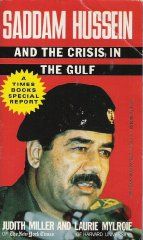
Books by Judith Miller




Most Viewed
home | biography | articles | blog | media coverage | spoken | audio/video | books | mailing list | mobile site